Big spender


So, on Tuesday evening I made three big purchases. Things I’d been saving up for, talking about, and debating for months. Of the three, guess which item I was most excited about. Was it:

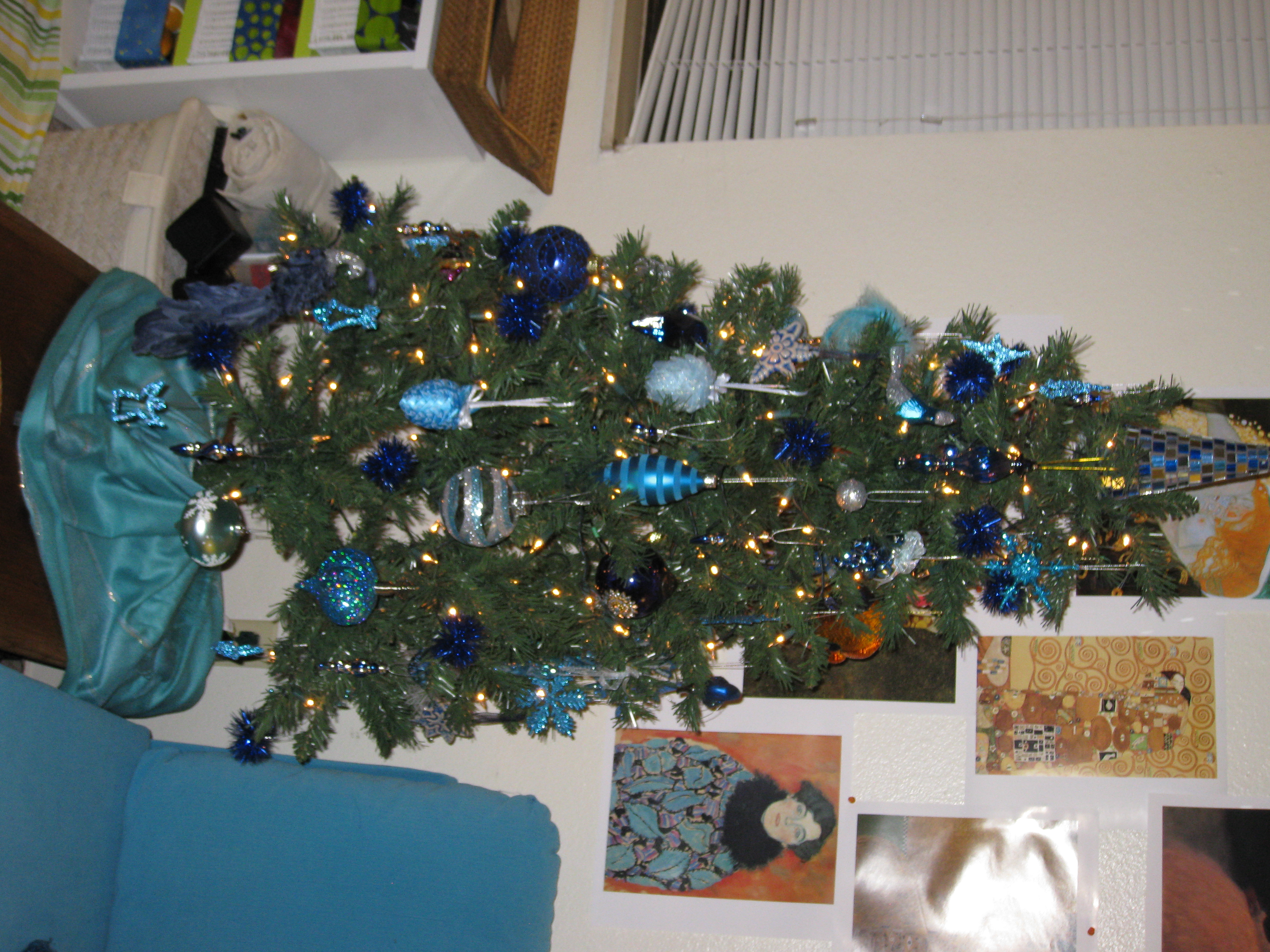
a) For $25 I bought myself a fake Christmas tree from the grocery store. It's pretty and has blue ornaments.

b) For a quarter of my monthly salary, a 36" LED TV with a fast refresh rate for playing HD videogames.

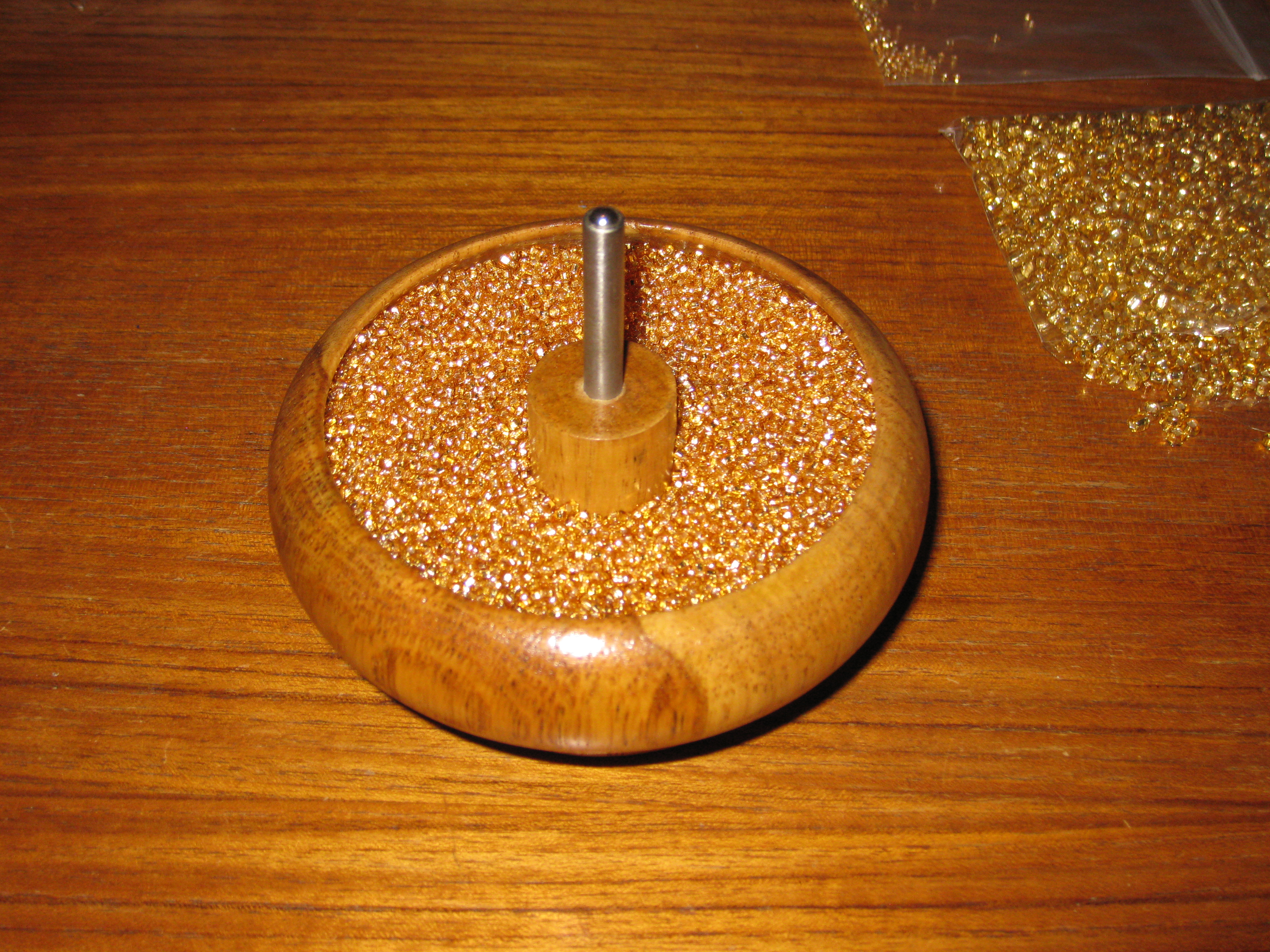
c) For $20, a bead spinner to make threading beads faster.

Did you guess the TV? Really? I don’t have a blog about videogames. To be fair, the tree was a close second, but I was super excited about the bead spinner. It’s kinda hard to explain, but you fill the bowl with beads. It has a metal rod sticking up through the middle of it, and when you spin the bowl, you can hold a needle into the beads and they all just jump on. I’ll post a video when I can get the stupid uploader to work.

Edit: got it!

Posted in fiber art | Tagged , , , , , | 1 Comment

Au, everyone’s fave element


I’ve always preferred Ag, but Au is currently experiencing such a tremendous rise in popularity I figured I’d better spin some yarn with it (if you aren’t a science nerd, Au is gold’s elemental symbol on the periodic table and Ag is silver’s).

Unlike yesterday’s yarn (wild rice and calico cat are the current name favorites around the ranch, maybe I should poll everyone?), I haven’t even started spinning this one yet and I have a few name ideas. I’m planning to spin just Marcello’s fiber (the brown, no white) from “Deep Roots”, plied with gold beads of two different sizes. I’m thinking “Gold Vein” as the name. As a second, likely-to-be-axed-immediately-upon-suggestion name, I was going with “Thar be gold in them thar hills”. 🙂

Posted in fiber art | Tagged , , , , , , , | Leave a comment

Yarn name ideas, anyone?


Mom and I desperately need your help. Remember this yarn? Mom has made it into a beautiful scarf, but we’re stuck. It’s official name right now is “brown and black yarn with black beads”, which is super lame.

Mom has some arbitrary rules which I often break about yarn naming: only two words (“kiss of the jade monkey” totally destroyed that rule) and avoid times of day (“luminous lavender twilight” broke both of those rules, “Frosty Morning” also a no-no).

Feel free to follow or break those rules and please, tell us in the comments your ideas for yarn names.

Posted in business, fiber art | Tagged , , , | 11 Comments

Archie the suri alpaca


A friend of ours has a little grey suri alpaca by the name of Archie. Now, this friend of ours, Mark, is one of our best alpaca buddies. We all sheared on the same day, and we each helped out with each other’s animals. So even though Archie isn’t technically our alpaca, he’s family.

For instance, I know that as soon as Archie had been restrained on the shearing table, instead of tensing up and humming like most alpacas, he actually went limp like a rag doll. I can easily imagine him laying there, waiting for the end to come, convinced that his life was over and only hoping that we’d end it quickly.

Knowing this about the little goof will make spinning his fiber even more fun. Because his staple (a lock of hair) length was so long, the mill couldn’t spin it into yarn. As a hand spinner, I LOVE long staples, especially when they’ve already been washed, carded, and blended by the mill. Mark brought the entire bag of roving over, nearly three pounds of unspun awesomeness. We estimate that I’ll be able to spin 2800 yards of yarn from this bag.

It looks kind of like a big gray brain right now, doesn’t it? Anyway, it’s blended with tencel, which should give it more character. Suri yarn can be very heavy and droopy.

Edit: Alpacas come in two breeds: Suri and Huacaya. Suris have longer, silky hair while huacayas are fluffy like cottonballs.

Posted in animals, fiber art | Tagged , , , , , , , | 5 Comments

Brittany on bunny patrol


My brother was warming up his car yesterday when he heard the alpaca alarm call. It’s a loud, high-pitched chirp that we’ve become as tuned to as the alpacas themselves. He investigated and found the girl alpacas lined up in their defensive formation, facing the terrifyingly aggressive advances of a small rabbit. They handle all such invasions in the same way, as a wedge of impressive alpaca might. Brittany takes the point position, with Mikayla and Tulip slightly behind and on either side of her. The babies are in the back and center, protected from deer, voles, tax accessors and other aggressive animals.

As my brother watched, Brittany began to drive the bunny out of the alpaca paddock and back into the field. She stepped forward aggressively, dodging left and right to cut off the marauding rodent before it could make a feint around her, like a sheep dog herding sheep or a cutting horse heading off a calf. Step by step, each foot of ground an agonizing victory, Brittany forced the bunny back, and finally succeeded in banishing the trespasser from the paddock. Peace was restored to the herd.

The alpacas have won one bunny battle, but have they won the war? Only time will tell.

Posted in animals | Tagged , , | 3 Comments

Happy Thanksgiving


Happy (belated) Thanksgiving to my American readers! The blog is taking most of the weekend off, in case you can’t tell. I’ll have new ‘paca stories for you on Monday.


Posted in completely unrelated | Leave a comment

Yarn sampler, slight site re-design


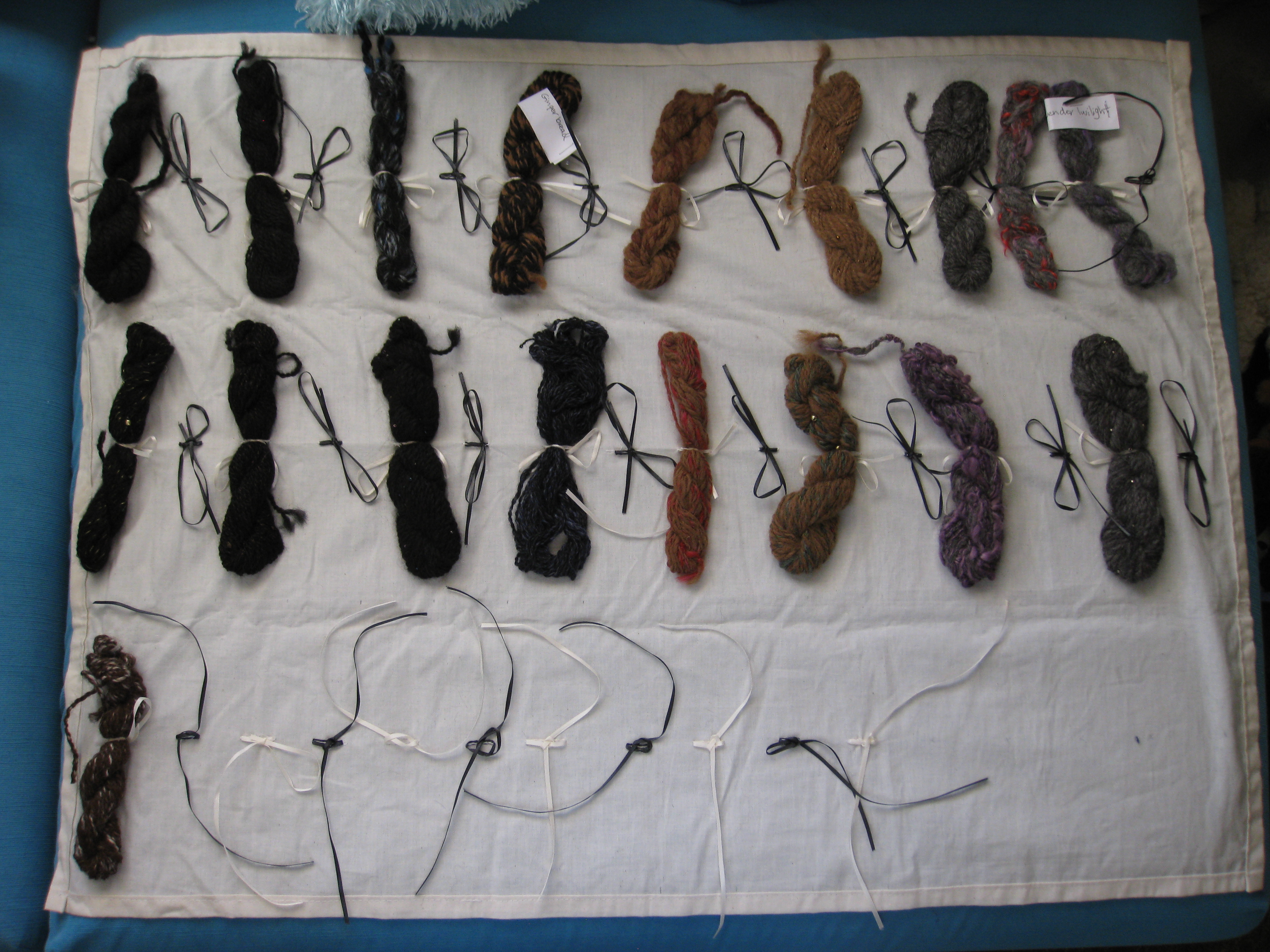
Awhile ago, Mom and I were struggling to come up with a way to explain to people how they could order custom yarn. There are so many combinations of beads, dyed fibers, and alpaca fiber. We haven’t entirely solved the problem, but we’ve made a few steps in that direction.

This innocuous little roll of fabric is our yarn sampler. It doesn’t look like much, until you unroll it and unfold it.

Ta da! Nice, right? We have little samples of many of the yarns I’ve made in here, grouped loosely by base color. It is fun to show people, and has helped explain what we can do.

As an aside, you may have noticed a slight redesign to the menus on the site. I made the links more obvious so folks who are placing orders can find the kind of things we make easily. I’ve added more yarns to the yarns page as well.

Posted in business, fiber art | Tagged , , | Leave a comment

Without no seams nor needlework


So you know that song “Scarborough Fair” by Simon and Garfunkel? The most memorable line is “Parsley, sage, rosemary and thyme” because they say it over and over, but there is a whole stanza I want to call your attention to:

“Tell her to make me a cambric shirt
Parsley, sage, rosemary, and thyme
Without no seams nor needlework
Then she’ll be a true love of mine. ”

It basically says: tell her to shove it, there’s no way I’m ever getting back with that girl. But that’s neither here nor there, my question for you is this: how can you make cloth with no seams or needlework?
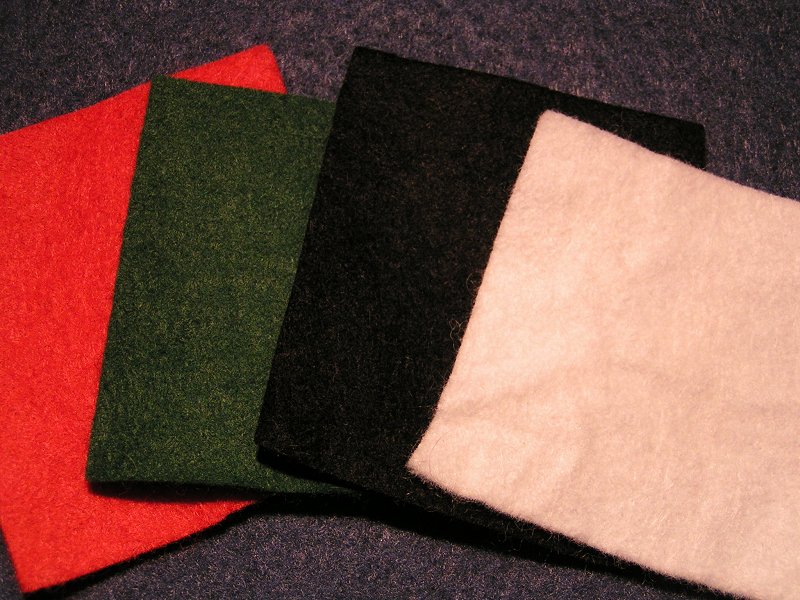
Plain weave

Tick tock tick tock…ding ding! Time’s up!

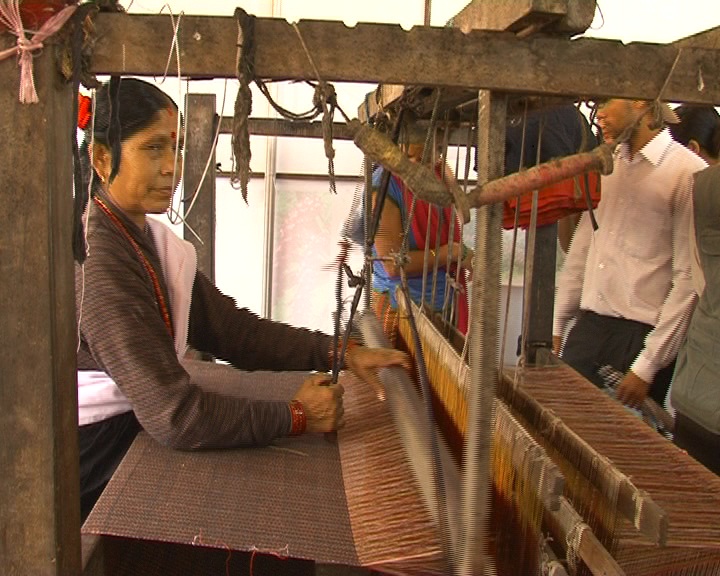
Back before fancy mechanized weaving, cloth was made in one long rectangular piece of fabric known as a bolt. Most fabric is still made that way, because that’s how looms work. So when you need something with a shape, like a shirt, you have to cut and sew it together, leaving seams. Or you go all Greek toga with it or something, but that’s risqué.
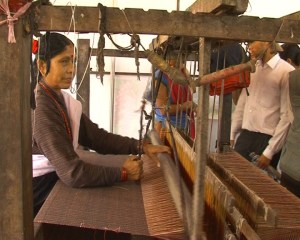
See how she's getting one long rectangle of fabric? By Krish Dulal, wikimedia.

Now, as knitters, we know that you can make fabric of sorts by knitting in the round, and it has no seams. But what do we use to knit? Needles.

That leaves one option: felting, specifically, wet felting. Commercial felt is made using enormous plates of barbed needles. Fiber is crisscrossed in perpendicular layers, and then pressed between the barbed needles. They tangle it up, creating fabric. Of course, these dry felting techniques use needles.

In wet felting, you crisscross layers of fiber, but instead of using needles to tangle it up into fabric, you use water and a detergent. It’s kind of magical, but the tiny are bubbles created by the detergent and the scales on the hairs themselves are enough to make fabric. Yesterday’s felt clutch had no seams nor needlework.

So, to return to the song, if some guy was singing to me about how impossible it was we’d ever be together, I’d make him the coarsest, least comfortable felt shirt ever. Then, while he was up on his high horse, he’d have a reason to feel martyred, like the monks who used to wear hairshirts.

Posted in fiber art | Tagged , , , , , | 2 Comments

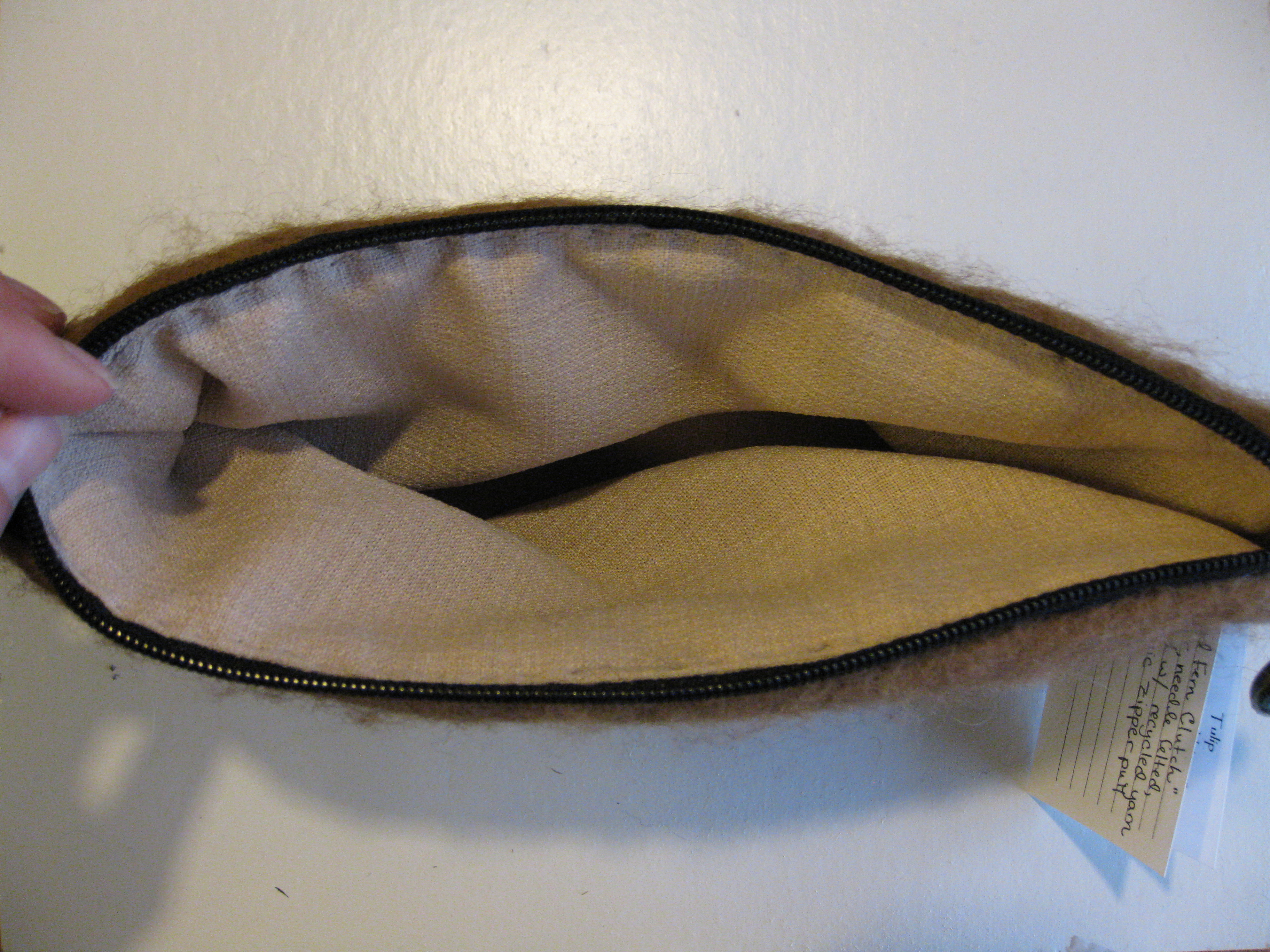
Fiddlehead fern clutch


I just sold this clutch to a graduate school friend. Before it leaves the nest, I want to share it with you all. I’m rather proud of it.

It’s made from Tulip’s neck and leg fiber. Those areas are only used for making felt, because they tend to be less consistent in length and softness than the back and sides.

The main body of the clutch was needle felted to hold it together in the correct form, and then wet felted to shrink and strengthen it. The brown yarn I used for the ferns is embroidered on, while the green bits are made from yarn scraps that I carded back into roving and then needle felted.

I lined the inside with organic cotton fabric, so little things don’t poke their way out of the clutch.

The shape is…organic. Well, it’s a little less square than I wanted, but it’ll have to do. Tulip’s fiber is hard to felt, it doesn’t want to stay in the shape you gave it.

Posted in fiber art | Tagged , , , , , | Leave a comment

On feed, and shortages thereof


A month ago, our hay supplier’s storage barn burned down. Around 100 tons of hay were lost in the fiery conflagration, including everything he had set aside for us for the winter. Now we’re scrambling for feed, and not just because of the barn fire. This situation has really driven home how global our economies are, even in, of all things, the hay trade.

Timothy hay –

We feed the horses timothy hay, for the most part. It’s a good hay, and the best stuff comes from the high altitude valleys. You can harvest hay twice during the growing season (called “cuttings”). Because we had such a late spring, and early winter, Colorado growers only got one cutting of timothy, effectively halving the availability of this staple. The alpacas can eat timothy, but we don’t feed it to them. Look at all those little seeds. I’d never get them out of the their fleece. Shudder.

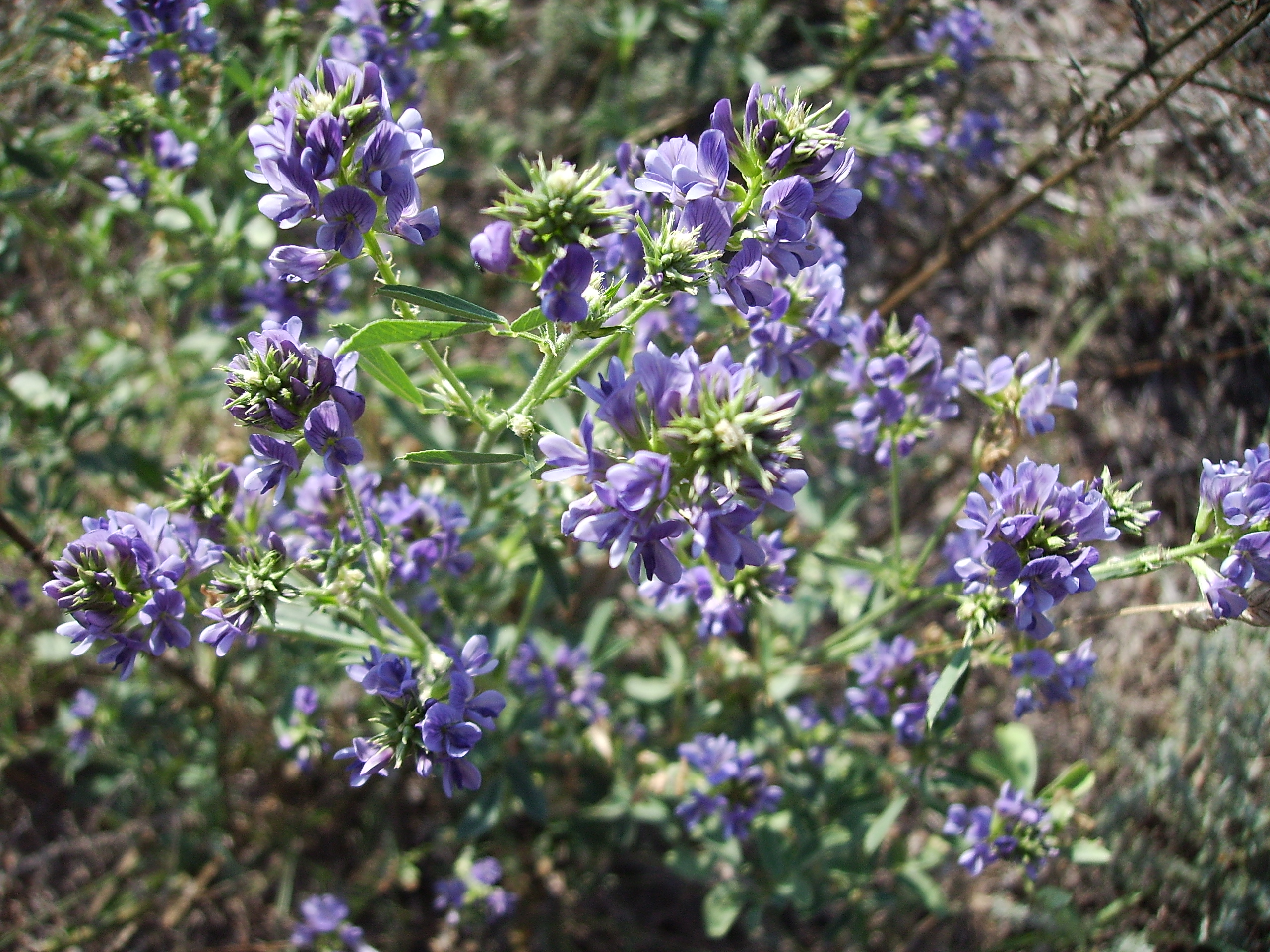
Alfalfa –

Both the alpacas and the horses get a little bit of alfalfa.  It’s the most expensive of our feeds, running at $14 a bale this year. It’s high in protein, and makes horses run hot. In the winter, this is actually kind of a good thing, as their digestion keeps them warm. The ‘pacas are just spoiled. They like the taste better, so Mom puts it at the bottom of their food bins, beneath the less tasty stuff.

Orchard –

The alpacas eat primarily orchard grass. Prices have jumped from $8.95 to $10.95 per bale, if you can find it at all. Droughts and fires in Texas and Oklahoma have dramatically reduced the availability of this grass. Feed stores and ranches are sending semi trucks to buy up all the Colorado grown stuff. We are producing less than usual, partially because of the short growing season this year, but also because many growers are converting their fields to corn for ethanol fuel.

On top of these local and national factors, shortages are further exacerbated by international disasters. The US government has pledged 100 million tons of hay to Japan as part of the tsunami relief effort.

I’m an ecologist, and if I had to sum up my discipline in 3 words, they’d be: “Everything is connected.” It seems obvious enough, but there’s nothing like scrambling to feed your animals here in the center of the United States because of a tsunami in Japan to really personalize the concept.

Posted in animals | Tagged , , , , , , , | Leave a comment